O nama
Za vaše zadovoljstvo nudimo vam dobro oblikovano svježe, sigurno i organsko meso s naše farme na vrlo higijenski način. Naša je motivacija da ako su naši kupci zadovoljni, onda smo i mi zadovoljni.
O namaContact Info
- Malucanovići 1, 88245 Posušje
- +387 39 692 184
- sisovic@sisovic.com
Biogas Plant at Tomislavgrad d.o.o. Farm
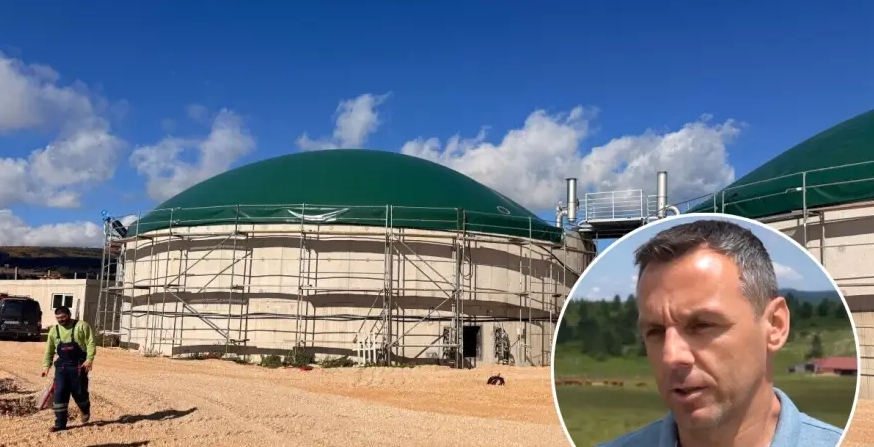
At the beginning of the upcoming summer, the first kilowatts of electricity from the “Tomislavgrad” dairy farm are expected to be fed into the grid. The biogas plant is already completed, and final access works are underway — including asphalt paving, installation of lighting and surveillance cameras — with a trial run expected within the next one to two months.
The farm is located in a rural area of Tomislavgrad at an altitude of 900 meters, surrounded by agricultural land, pastures, and water resources of high ecological value. For this reason, environmental protection remains a top priority.
How Does the System Work?
The “Tomislavgrad” farm has been the largest milk producer in Bosnia and Herzegovina for the past decade. It currently has around 1,100 head of cattle, including up to 550 dairy cows, while the rest are young stock. The farm produces approximately 17,000 liters of milk daily, reaching between 5.5 and 6 million liters annually.
Alongside milk production, large quantities of manure are generated, which are currently spread across approximately 490 hectares of cultivated land.
The proximity of lagoons and arable land has been a significant advantage so far. However, in the future, the manure will first be processed in the biogas plant.
All manure will be directed into a pre-lagoon that is part of the biogas system. From there, it flows into two fermenters, each with a capacity of 3,500 cubic meters (7,000 cubic meters in total), where the manure is mixed and retained for three to four months, depending on methane content. The resulting gas is then used in a gas engine to generate electricity.
The volume of manure essentially remains the same, but the homogenized mixture now passes through a separator, where the solid and liquid fractions are separated.
One Hour Equals a Month of Household Consumption
The generator has an installed capacity of 400 kW, although actual production is expected to be between 250 and 300 kW of electricity, which is typical during the initial optimization phase of the plant.
The farm has an agreement with Elektroprivreda HZHB to supply 150 kW to the grid. The remaining electricity (approximately 100–150 kW) will be used for the farm’s own needs, including milking, milk cooling, ventilation, lighting, and equipment operation.
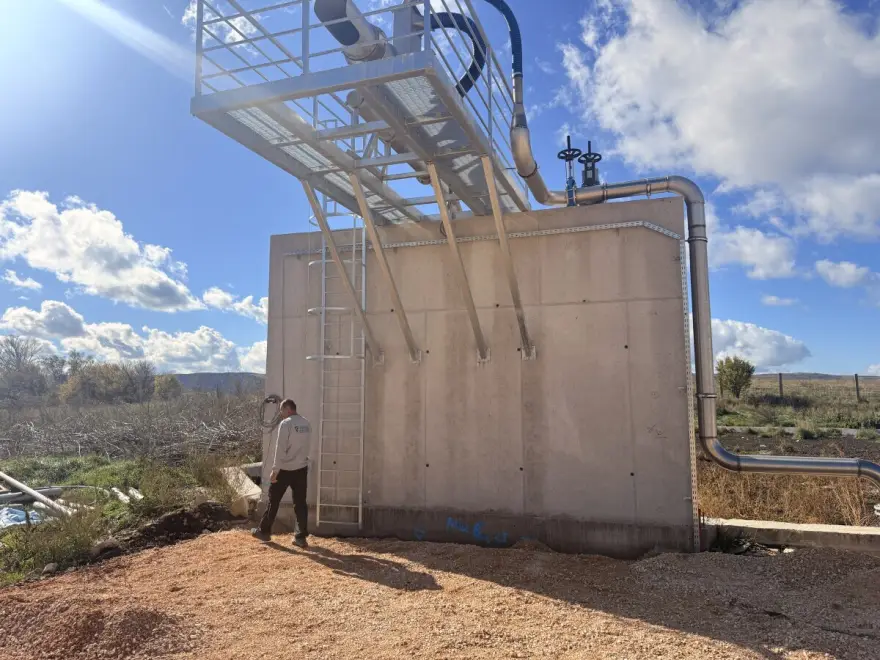
The total project value amounts to approximately BAM 7.5 million, including VAT.
According to available data from regulatory authorities, the average monthly electricity consumption per household in Bosnia and Herzegovina ranges between 350 and 450 kWh. This means that in just one hour of operation, the plant produces enough electricity to cover the monthly consumption of a single household. On a daily basis, this equals the monthly consumption of 16 to 20 households. The portion of electricity sold to the grid alone will cover the monthly consumption of approximately 8 to 10 households per day.
A Multi-Million Investment
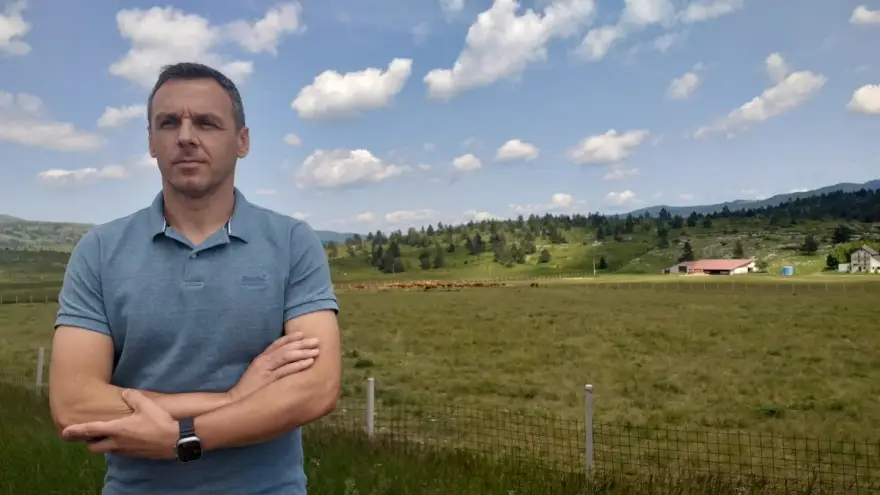
The total value of the project is approximately BAM 7.5 million, including VAT. According to Pavković, part of the investment was financed through the company’s own funds, a significant portion through loans, and the largest support came from capital investment incentives provided by the Federal Ministry of Agriculture, Water Management, and Forestry.
In essence, the biogas plant converts manure into energy, enabling the farm to produce both electricity and heat, making it partially energy self-sufficient in practice. Additionally, it generates extra revenue through the sale of surplus electricity to the grid. From an environmental perspective, methane that would otherwise be released into the atmosphere is captured and used as fuel, significantly reducing greenhouse gas emissions. The digestate remaining after the process is a higher-quality and more stable organic fertilizer.
The farm thus achieves a closed-loop system: manure → energy → fertilizer → food production, resulting in more efficient resource use and reduced losses.